



Every Diwali, we eat and gift kilos of sweets without a second thought. They look perfect, smell amazing, and taste heavenly, but what if that shiny piece of barfi isn’t as innocent as it looks? What if it’s hiding something harmful?
Here’s the catch: not all that shines (or tastes sweet) is pure. In the rush to meet festival demand, many sweet shop owners and sweet makers take shortcuts. They mix in cheaper, non-edible, and somewhat harmful ingredients into our festive delicacies. And while the sweets may look perfect, they may not be as safe as they seem.
This is something most of us don’t think about, but maybe we should. Adulteration in sweets is becoming common, and it isn’t just unhealthy; it can be dangerous. Let’s take a quick look at how to verify if your sweets are adulterated, learn a few simple home tests to identify them, and explore some tips to buy pure, non-adulterated ones.
What People Really Think About Mithai Purity
Out of curiosity, I did a small survey at work. I asked 10 teammates one simple question: “Are you sure your Diwali sweets are pure?” I must say, their answers regarding adulteration in sweets were quite interesting. Here’s how they reacted:
- Four said they trust branded shops or shops with a legacy of decades, so they don’t really worry about purity.
- Three said they’re aware adulteration happens, but don’t know how to check adulteration in sweets.
- Two mentioned they’ve heard about fake mawa but don’t know how to check mawa purity.
- One person asked, “By the way, what exactly is adulteration? I don’t really know much about it.”
So it was clear: most people care about adulteration in sweets, but few actually know how to find out. So, let’s fix that.
Related: 9 Days of Navratri Foods!

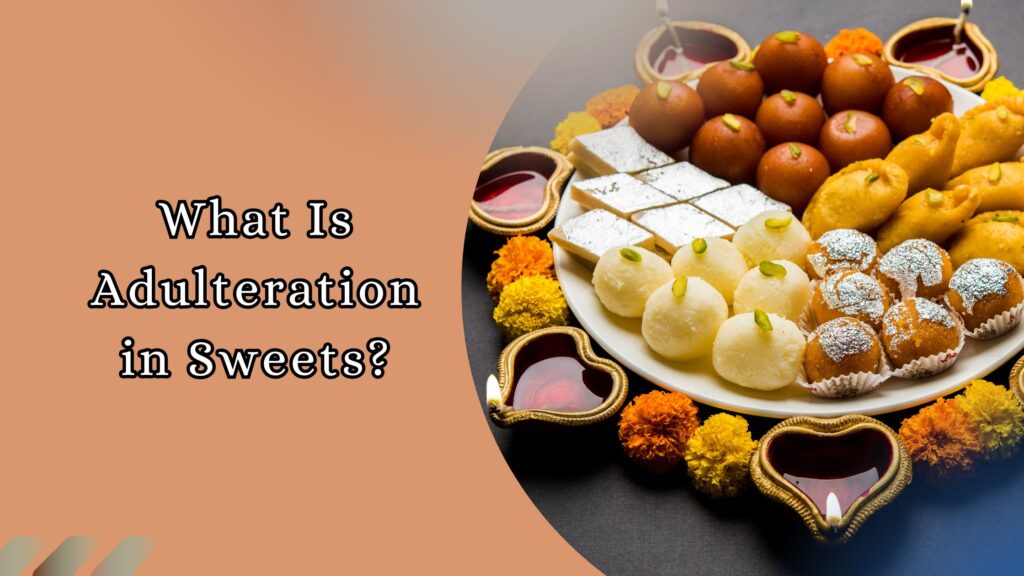
What Is Adulteration in Sweets?
In simple words, adulteration in sweets means mixing unwanted, low-quality, or even harmful substances in food. It’s done to make more profit or increase shelf life. During Diwali, when demand for sweets explodes, adulteration becomes common. For example:
- Some sweet shops add starch or flour to mawa to make it heavier.
- Instead of pure ghee, they use vanaspati, palm oil, or cheap oils.
- In sugar, things like maltodextrin, chalk, sand, or urea might be mixed.
- Even the silver foil (vark) on sweets can be fake, thin aluminum foil.
All these are examples of adulteration in sweets, and yes, they can seriously harm your health.
What Are the Most Common Adulterants in Diwali Sweets?
Here’s a simple list of some common adulterants in festive sweets to remember:
| Sweet Components | Common Adulterants | Effects / Risks |
| Mawa / Khoya | Starch, flour, detergent | Poor taste, digestion problems |
| Ghee | Vanaspati, mineral oil | Clogs arteries, bad for heart |
| Sugar | Urea, chalk, sand | Toxic, may cause kidney issues |
| Colours | Textile dye, chemical colour | Allergies, harmful for kids |
| Silver Foil | Aluminum foil | Not edible, can cause metal poisoning |
| Milk | Water, starch | Reduces nutrition, spoils quickly |
How to Check Adulteration in Sweets: Easy Home Tests
During a recent raid, Assistant Commissioner (Food) Sarvesh Mishra confirmed that around 1,100 kg of sweets were destroyed on the spot in Sector 155, Noida, Uttar Pradesh. Such raids and reports make us even more worried.
But the good news is, you don’t need a lab to check for adulteration in sweets. A few simple home tricks can help you identify if your mithai is real or fake. Here’s how:
1. Iodine Test (For Starch in Mawa)
- Take a small piece of mawa and mix it with warm water. Let it dissolve.
- Add a few drops of iodine solution.
- If the mixture turns blue or black, that means starch is present.
- Pure mawa will show no colour change.
- It’s one of the easiest ways to check adulteration at home.
2. The Palm Test
- Press a small piece of mawa or sweet in your palm.
- Pure mawa feels slightly oily and grainy. It should leave a light, greasy stain and smell of ghee.
- If it feels sticky, powdery, or dry, it’s probably adulterated.
- Sometimes, even the smell can tell you what kind of oil the sweet is made in.
3. Detergent or Foam Test
- Dissolve a bit of the sweet in warm water and shake it.
- If it creates foam or lather, it may contain detergent or soap.
- This test is simple but surprisingly revealing.
4. Vanaspati Test (For Fake Ghee)
- Mix one tablespoon of sweet with two tablespoons of hydrochloric acid and a pinch of sugar.
- If the solution turns red, it means vanaspati or hydrogenated oil is present instead of pure ghee.
5. The Silver Foil Test
- Many sweets come decorated with shiny silver foil (vark).
- Rub it between your fingers.
- Real silver foil disappears easily.
- If it feels thick, crumples, or doesn’t dissolve, it’s fake aluminum foil, not safe to eat.
6. Sugar Check
- Now, what are the common adulterants of sugar?
- They include urea, chalk powder, washing soda, and even sand.
- Rub a little sugar between your fingers; if it feels gritty or leaves a chemical smell, it’s not pure.
- Also, pure sugar dissolves completely in water without leaving a residue.
Why Mawa (Khoya) Is Most Commonly Adulterated
If you love peda, burfi, or even gujiya, you’re eating sweets made with mawa. Mawa, also called khoya, is milk cooked down slowly until it becomes thick and grainy. It’s rich, creamy, and delicious, but it’s also expensive and time-consuming to make.
That’s why many sellers end up cheating. They mix starch, flour, or synthetic milk solids to bulk up the sweets. Some even use detergents or chemicals to make them look smoother and fresher.
These adulterants in sweets don’t just ruin the taste; they can upset your stomach and even cause long-term health problems.
Also Read: Why Are So Many Young, Non-Drinking Indians Getting Fatty Liver?
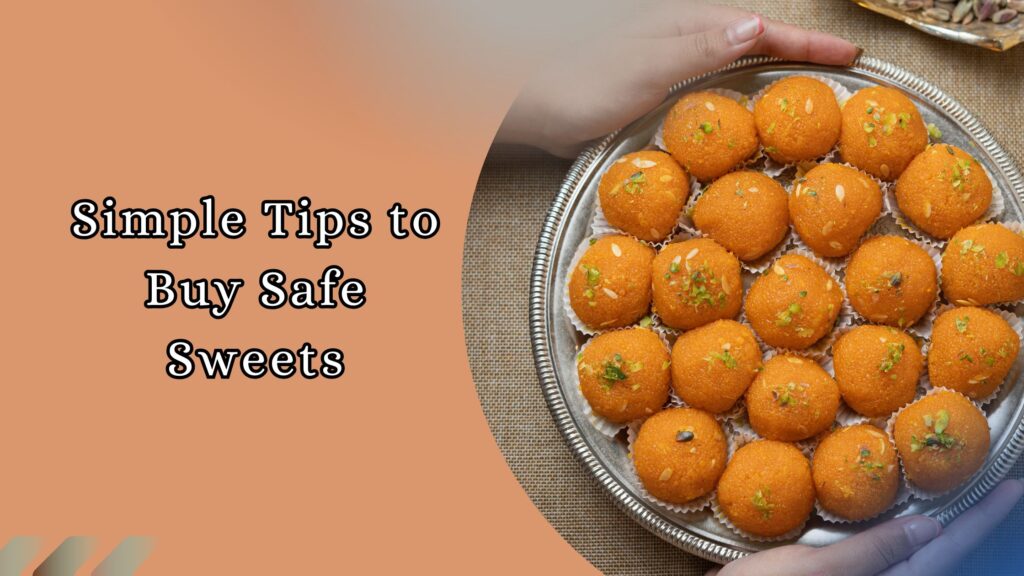
Simple Tips to Buy Safe Sweets
1. Buy from trusted brands or known local shops: Don’t go for the cheapest boxes; make quality your priority. Quality costs a bit more, but it saves your health.
2. Check labels: Look for FSSAI license numbers, manufacturing dates, and expiry information before buying. In India, FSSAI has a multi-prolonged approach to combat food adulteration. For detailed guidance, you can view FSSAI’s manual on detecting adulteration through rapid taste tests.
3. Avoid overly bright or shiny sweets: They may contain artificial colours or metallic polish. It’s safer to go for traditional sweets like laddoos or kaju katlis instead of the fancy ones.
4. Taste and smell before buying large quantities: Pure sweets have a mild, natural aroma. If something smells synthetic or tastes a bit unusual, it’s better to skip it.
5. Avoid long-stored boxes: Sweets, especially dairy-based ones, if not stored in a proper place, spoil quickly.
6. When in doubt, make it at home: It may take more time, but nothing beats the peace of mind of knowing your sweets are truly pure.
Celebrate Diwali with Purity and Care
This Diwali, let’s promise ourselves one thing: to celebrate with pure joy and pure sweets. Be alert, be aware, and let’s educate others. The true sweetness of the festival lies not in how many boxes you gift, but in knowing they’re genuine and safe, and in keeping your loved ones protected.
Gift a box of homemade sweets to your family and friends this Diwali and save them from adulteration in sweets. After all, the best Diwali mithai is the one made and shared with purity.

