


Medical Disclaimer: This article on Mouth Taping vs Nose Strips, is for informational purposes only and does not replace professional medical advice. If you snore heavily, wake up gasping, or feel exhausted no matter how much you sleep, please talk to a doctor before trying mouth taping or nose strips. Some breathing issues need a real diagnosis, not a home fix.
Quick Summary: In this article, I’m breaking down two trending breathing hacks, mouth taping and nasal strips, and what actually happens when you use them. You’ll learn how each one works, what the research really says (spoiler: it’s not what social media claims), who should avoid mouth taping completely, and a simple comparison to help you figure out which one, if either, fits your situation.
Why Everyone’s Suddenly Talking About Mouth Taping vs Nose Strips
I keep seeing it everywhere. Gym friends with a strip stuck across their nose before a run. Reels claiming taping your mouth shut at night fixes snoring, boosts deep sleep, and even sharpens your jawline. It’s one of those trends that sounds too simple to be true, and honestly, most of the time, that’s exactly the problem.
I haven’t personally taped my mouth or tried nasal strips for a workout, but I’ve watched this play out around me. A few of my running and gym friends swear by nose strips before a heavy session. And people I know who snore badly, the kind where their partner complains every morning, have tried mouth taping hoping for a fix. Some felt a difference, while others just felt uncomfortable and gave up after a few nights.
So let’s actually look at mouth taping vs nose strips, what these two things do, what the science says in 2026, and where the real risk lies. Because this isn’t a totally harmless “just try it and see” situation, especially with mouth taping. If you’ve been searching “is mouth taping safe for sleep” or wondering whether it’s actually safe to tape your mouth shut at night, this article will clear things up.
What Is Mouth Taping, Exactly?
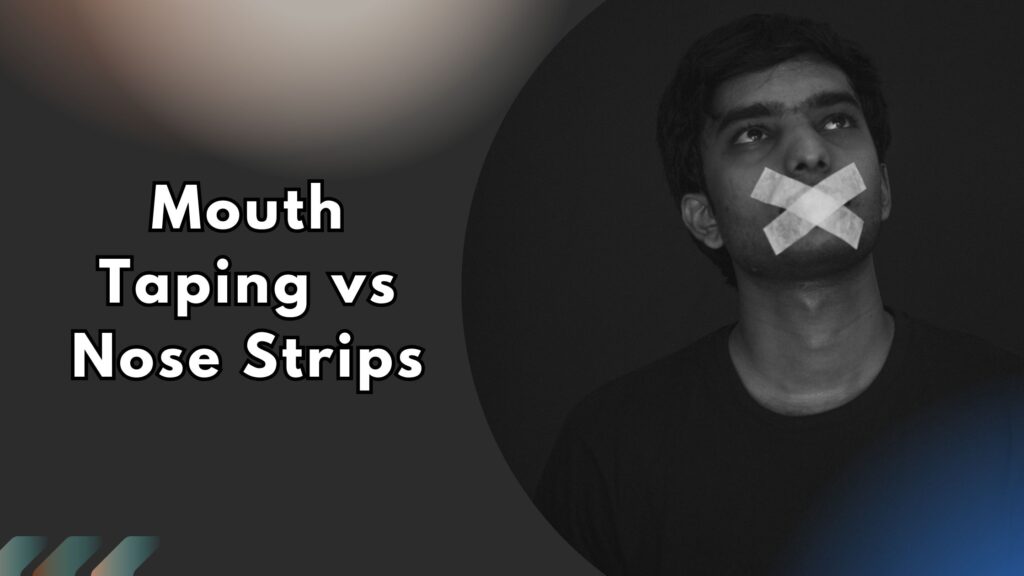
Mouth taping is exactly what it sounds like. You place a small strip of tape, usually a gentle medical-grade one, over your lips before sleeping. The idea is to force nose breathing through the night instead of mouth breathing.
The logic behind it isn’t baseless. Mouth breathing during sleep has been linked to snoring and, in some cases, sleep-disordered breathing. So the logic goes like: seal the mouth, force the nose to do the work, breathing improves.
But theory and real-world evidence don’t always match up, and that’s where this gets interesting.
Practical tip: if you’re even considering trying this, start with the gentlest, skin-safe tape made specifically for mouth taping, not random medical tape from your first aid box. Your lips are sensitive, and cheap tape can irritate the skin.
If you’re wondering how to start mouth taping safely, the short answer is: don’t jump straight to a full night. Try it for twenty or thirty minutes while you’re awake and relaxed first, just to see how your body reacts, before committing to sleeping with it on. Common mouth taping side effects include mild skin irritation, a dry or cracked feeling on the lips, and for some people, a sense of panic if they wake up and feel restricted.
What About Nasal Strips? How Are They Different?
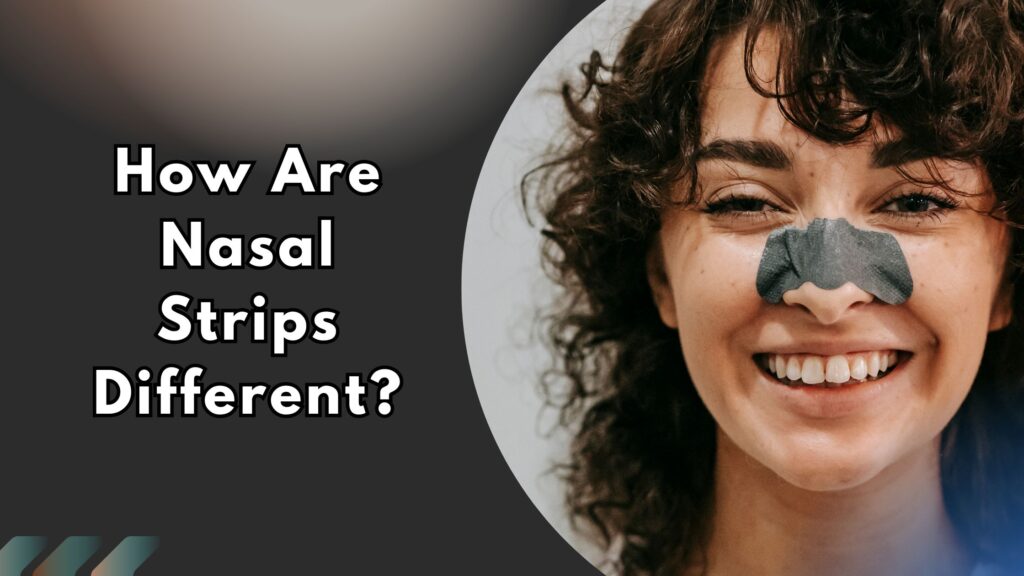
Nasal strips are the adhesive bands you stick across the bridge of your nose. Unlike mouth tape, they don’t seal anything shut. They mechanically pull the nostrils open a bit wider using a small spring-like band built into the strip, which is meant to reduce resistance and let more air in through the nose.
This is a completely different mechanism from mouth taping. Nasal strips don’t restrict your mouth at all. You can still breathe through your mouth if your body decides to, the strip just tries to make nasal breathing a little easier.
That’s actually the biggest difference between the two, and it matters a lot for the safety conversation coming up next.
Practical tip: If you’re wondering that “do magnetic nose strips work”, then yes, but with a caveat. Nasal strips only work if placed correctly, across the widest part of the nasal bridge, not too high. A lot of people place them wrong and then assume the product doesn’t work.
You might also like: Reality of Viral Magnetic Nose Strips: 7 Benefits and Risks You Should Know
Does Mouth Taping Actually Work? What the Research Says
Here’s where I have to be honest with you, because this is genuinely a serious topic and I’m not going to sugarcoat it.
A 2025 systematic review published in PLOS One looked at 10 existing studies on mouth taping and related methods, covering 213 patients total. The review found that mouth taping showed little clear benefit overall, and flagged a potential risk of asphyxiation in people with nasal blockages. Only 2 out 10 studies showed a small improvement, and that was limited to people with mild obstructive sleep apnea specifically, not the general population trying it for a better night’s sleep.
The same review also noted that the quality of the underlying studies was generally weak, which makes it hard to draw firm conclusions either way.
This lines up with what I’ve noticed from people around me too. It’s not a universal fix. For some, it helped a little with snoring. For others, it just felt restrictive and they stopped after a few nights.
Practical tip: if you try mouth taping and wake up anxious, panicky, or unable to breathe properly through your nose, stop immediately and don’t try again until you’ve spoken to a doctor.
Do Nasal Strips Actually Improve Breathing and Performance?
Multiple studies, like the one from University at Buffalo and more recent reviews, have consistently found that nasal strips don’t meaningfully improve performance during intense exercise. An otolaryngologist at Henry Ford Health explained that athletic performance depends far more on lung capacity, heart function, and muscle efficiency than on how open your nostrils are. During high-intensity activity, most people naturally switch to mouth breathing anyway, which makes the strip largely irrelevant at that point.
That said, it’s not a complete no. A 2024 research article of American Journal of Otolaryngology on endurance athletes found that people with an actual structural nasal issue, like a narrowed nasal valve, did see a real benefit from nasal strips. If your anatomy is genuinely restricting airflow, the strip helps restore what’s missing. If your nose already works fine, you’re mostly getting a placebo effect and a slightly more open-feeling nostril.
Practical tip: if you have chronic congestion, allergies, or a known nasal structural issue, nasal strips may genuinely help you during workouts. If you breathe fine normally, don’t expect a performance boost, just maybe a comfort one.
Mouth Taping vs Nose Strips: Quick Comparison
| Factors | Mouth Taping | Nasal Strips |
| What it does | Seals the mouth shut to force nose breathing | Widens nostrils to ease airflow |
| Best used for | Occasional mild snoring, in healthy individuals | Congestion, workouts, mild nasal restriction |
| Cost in India | Roughly ₹150–400 for a pack of tapes | Roughly ₹250–600 for a pack of strips |
| Comfort | Can feel restrictive; takes adjustment | Generally comfortable, no restriction |
| Safety risk | Real risk if you have any nasal blockage or undiagnosed sleep apnea | Low risk, doesn’t restrict breathing |
| Evidence strength | Weak, small studies only | Mixed; helps mainly if you have a nasal issue |
The Real Risk of Mouth Taping vs Nose Strips Nobody Talks About
See, mouth taping is not safe for everyone, and this isn’t me being overly cautious. If you have any kind of nasal blockage, whether from allergies, a cold, a deviated septum, or undiagnosed sleep apnea, taping your mouth shut removes your backup breathing route. Your nose becomes the only way air gets in, and if that’s blocked or narrowed, you’re in trouble while you’re asleep and least able to react.
Researchers reviewing the existing studies specifically warned that mouth taping could pose a serious risk of asphyxiation if a person’s mouth breathing is caused by an underlying blockage. This is exactly why I don’t think this is something to casually try because a reel or short told you to.
If you snore heavily, or if anyone has ever told you that you stop breathing briefly in your sleep, please get evaluated for sleep apnea before trying mouth taping. This isn’t a scare tactic, it’s just how the physiology works.
How Common Is This in India?
A community-based study of urban South Indian adults, published in the Journal of Diabetes Science and Technology, found that around 40% of participants with a normal body mass index (BMI) reported habitual snoring. The researchers also found that daytime sleepiness was common, and habitual snoring was linked to poorer metabolic health. Separately, pooled research across multiple Indian studies estimates that obstructive sleep apnea affects around 11% of Indian adults overall, and up to 13% of men specifically.
That’s literally a serious number. It means a good portion of the people casually trying mouth taping because of a trend might actually be dealing with an underlying issue they don’t know about yet, which is exactly the group that shouldn’t be self-treating with tape.
Related: Poor AQI in Delhi: How to Stay Healthy and Protect Lungs from Air Pollution Naturally.
Common Myths About Mouth Taping and Nose Strips
- Myth: Mouth taping cures snoring for everyone.
Fact: Not true. The research shows benefit mainly in mild cases, and even then, it’s inconsistent.
- Myth: Nasal strips boost your VO2 max or endurance.
Fact: Not for most people. Unless you have an actual nasal restriction, the performance benefit is mostly psychological.
- Myth: If it’s sold online with good reviews, it must be safe for everyone.
Fact: Reviews reflect comfort and perceived benefit, not medical safety. Everyone is different, and so are our bodies; plenty of people who shouldn’t be mouth taping still do it and just don’t realise the risk.
- Myth: Mouth taping and nose strips do the same job.
Fact: They don’t. One restricts your mouth, the other opens your nose. Completely different mechanisms and completely different risk profiles.

When You Should See a Doctor Instead
Please don’t rely on either of these if:
- You’ve been told you snore loudly and irregularly, with pauses in breathing
- You wake up gasping or choking
- You feel exhausted during the day no matter how many hours you sleep
- You have a known nasal blockage, deviated septum, or chronic congestion
- You’ve never had a proper sleep evaluation and you’re over 30
A sleep study or an ENT consultation is a small step that can catch something serious before you self-treat it with a strip of tape.
Key Takeaways From This Article
- Mouth taping has weak evidence overall and real safety risks for people with nasal blockages or undiagnosed sleep apnea
- Nasal strips are low-risk but mostly only help people who already have a structural nasal issue
- Neither is a substitute for a proper diagnosis if you have serious snoring or breathing concerns
- India has a genuinely high rate of undiagnosed snoring and sleep apnea, so don’t assume trend-following is harmless
- If you want to try nasal strips for workouts, correct placement matters more than the product itself
Frequently Asked Questions on Mouth Taping vs Nose Strips
1. Is mouth taping safe for everyone?
No. It can be risky for people with any kind of nasal blockage, allergies, or undiagnosed sleep apnea, since it removes your backup breathing route.
2. Do nasal strips actually help you breathe better while running?
Only meaningfully if you already have a nasal airflow restriction, like a deviated septum. For people with normal nasal anatomy, the benefit is mostly minimal.
3. Can I use mouth tape every night?
This isn’t something I’d recommend without first ruling out sleep apnea or nasal blockages with a doctor, especially for nightly, long-term use.
4. Which is cheaper, mouth taping or nose strips?
Mouth tape is usually slightly cheaper in India, often ₹150 to ₹400 per pack, compared to ₹250 to ₹600 for nasal strips, though prices vary by brand.
5. Do mouth taping and nose strips work well together?
Not really, since they solve different problems. Nose strips help airflow during use, mouth tape restricts an airway entirely. Combining them without medical guidance isn’t something I’d suggest.
6. What’s a safer alternative if I just want to stop snoring?
Start with a proper sleep evaluation. Simple things like sleeping on your side, managing weight, and treating nasal congestion often help more than either of these products, and they come with far less risk.
7. Does mouth taping work for snoring caused by allergies or a blocked nose?
No, and this is actually the group most at risk. If your snoring comes from a blocked or congested nose, taping your mouth shut removes your only working airway. Clear the congestion first, don’t tape over it.
8. Can mouth taping help with sleep apnea specifically?
Only in a couple of small studies, and only for mild cases under medical supervision. It is not a treatment for moderate or severe sleep apnea, and using it that way without a doctor’s guidance can genuinely be dangerous.
Sources and References
- Breaking social media fads and uncovering the safety and efficacy of mouth taping in patients with mouth breathing, sleep disordered breathing, or obstructive sleep apnea: A systematic review.
- Study Shows Athletes Get No Kick From Nasal Strips.
- Do Nasal Strips Improve Athletic Performance?
- Improvement of the aerobic performance in endurance athletes presenting nasal valve compromise with the application of an internal nasal dilator.
- Prevalence of Sleep Abnormalities and Their Association with Metabolic Syndrome among Asian Indians: Chennai Urban Rural Epidemiology Study (CURES – 67).
- Systematic review and meta-analysis of the prevalence of obstructive sleep apnea in Indian adults.