

Last Updated On: August 13, 2026
Quick Note: This article is educational, not medical advice. If something about your cycle feels genuinely off to you, that’s worth a conversation with a doctor rather than something to self-diagnose from an article.
It was a Monday morning. Like any other, except the storm clouds brewing within a girl felt particularly ominous. Her lower abdomen pounded with a familiar ache, an announcer to the monthly deluge. Looking at the calendar she realised that she was right; it was that time of the month again.
Every month, this internal storm arrives with its own set of challenges: back pain, mood swings, and the most dreaded PMS. What if, instead of just pushing through this storm, there was a way to actually understand it, and work with it? This is a detailed breakdown of your menstrual cycle, along with real tips to manage these days more smoothly.
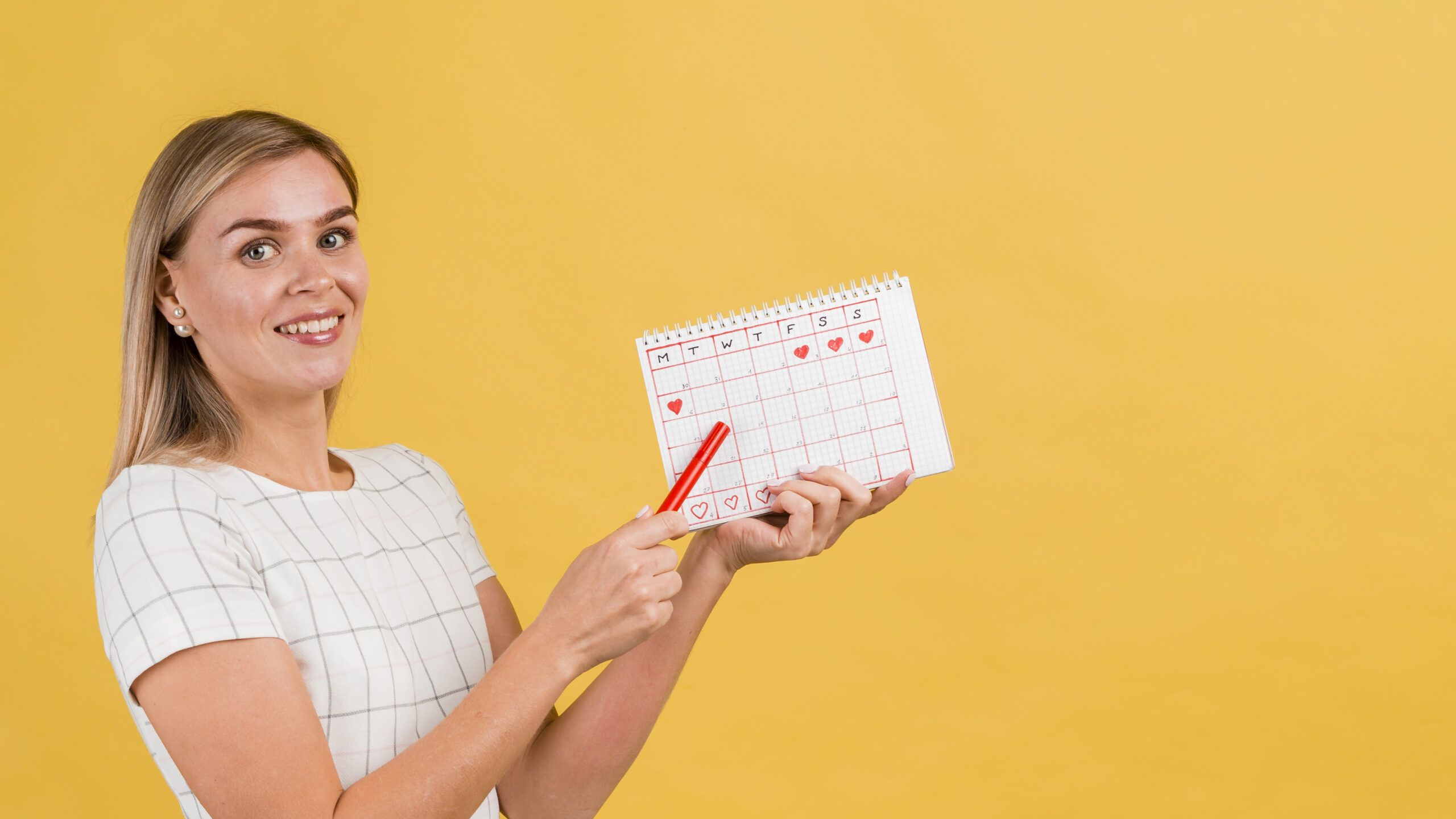
Your Menstrual Cycle In Simple Terms
Your menstrual cycle is very comparable to a personal weather forecaster. It has its bright moments, very cloudy periods, and all the shades of grey that exist in between. According to the Cleveland Clinic, menstruation typically occurs every 21 to 35 days and may involve bleeding that lasts for three to seven days.
Imagine your cycle as four seasons: It is divided into winter, spring, summer and autumn. Fluctuations occur with each season: the cold and, at times, stormy winter of a woman’s period to the blooming and hopeful spring of ovulation. Understanding these patterns can help you predict and plan for what’s to come, turning those unpredictable weather shifts into a familiar forecast.
To make your understanding better, here is the weather and season analogy to explain the phases of the menstrual cycle:
Winter is period
This is when the endometrium, or the lining of your uterus, gets discharged because it was in preparation for a probable conception. You just need to see it as your body simply switching to another form of rest. You might feel chilly with cramps, experience mood swings, or just want to hibernate. But don’t worry, this cold front will pass.
Spring is the follicular phase
This is when your ovaries begin developing tiny sacs called follicles, each containing an egg. It’s a season of renewal and growth, like the trees around us. Rising estrogen during this phase is often what makes you feel more energised and hopeful, not a coping mechanism, just your actual hormones shifting.
Summer is ovulation
This is when one lucky egg is released from the ovary. Imagine that this is the show of fireworks in your body that goes on and on in cycles. You can also feel certain differences, for instance, the boost in the levels of fertility, slightly raised body temperature, and change in cervical mucus.
Fall is the luteal phase
This is the time that elapses from the time of ovulation, the month up to the commencement of the next calendar month. That is when one is like the autumn leaves, which are about to shed and indicate that your body is preparing for winter. It is possible that you have premenstrual status, for example, swelling, increased feeling in the breast or changes in mood.
Remember, every woman’s cycle is unique, and these are just general guidelines. Paying attention to your body’s signals can help you understand your personal weather patterns and make the most of each season.
Also Read: Vegetarian And A Woman? Your Creatine Baseline Is Already Lower
Why This Matters More for Indian Women
NFHS-5, India’s largest health survey, found that over 57% of Indian women aged 15 to 49 are anemic, up from 53% in the previous round. Menstrual blood loss is one of the named contributing factors, alongside inadequate dietary iron intake. That’s not a rare condition. It affects more than half of Indian women in this age group, directly tied to the same cycle this article is breaking down.
PCOS is the other one worth knowing about. A nationwide ICMR-affiliated study of nearly 10,000 Indian women found a national PCOS prevalence of 19.6%. That’s using the Rotterdam criteria, the most commonly used diagnostic standard today. PCOS often shows up as irregular cycles. That’s exactly why tracking your own pattern, not just reading about the “typical” 21 to 35 day cycle, actually matters.
None of this is meant to worry you. It’s meant to explain why paying attention to your own cycle matters. Getting a simple blood test if something feels consistently off is worth taking seriously, rather than dismissing period pain or irregularity as just something to push through.
Tips To Fit In Each Phase
Menstruation Phase:
- Treat yourself to a warm bath, read a book, or binge-watch your favourite show.
- A bottle of hot water or maybe a heating pad can work wonders.
- Drinking plenty of water can help avoid bloating and discomfort.
Follicular Phase:
- Hit the gym, begin a new project, or tackle that to-do list.
- Your mood is likely to be upbeat, so enjoy spending time with friends and family.
- This is a great time to try something different.
Ovulation:
- Track your basal body temp. Or cervical mucus to pinpoint your ovulation day.
- If you’re trying to conceive, this is your prime time.
- Ovulation often brings a surge in confidence and energy.
Luteal Phase:
- Opt for whole foods and limit processed snacks.
- Incorporate relaxation techniques such as meditation or yoga into your routine.
- Gentle activities like walking or swimming can help manage PMS symptoms.
You May Also Like: Postpartum Fitness: 10 Gentle Workouts for New Moms to Regain Strength
Final Quotes!
I hope that by understanding the phases and their impact on the month, you can wisely lead it and make the right choices for your health and body. It’s a natural and essential part of being a woman. By recognising the phases and their effects, you can better guide your month and make informed decisions about your health and well-being.
Just also bear in mind that every woman’s cycle is different from the next. One may find that something effective for her might not be so for the other. Always respect any signs that your body gives you, especially during your menstrual cycle; do not just ignore any abnormality and go see a medical doctor.
Frequently Asked Questions
1. How long should a normal menstrual cycle be?
Typically between 21 and 35 days, with bleeding lasting 3 to 7 days. Cycles outside this range aren’t automatically a problem, but consistently irregular cycles are worth mentioning to a doctor.
2. Why are Indian women more likely to be anemic?
NFHS-5 data shows menstrual blood loss combined with inadequate dietary iron intake as key contributing factors. It’s a widespread issue, affecting more than half of Indian women aged 15 to 49.
3. What are the signs of PCOS I should watch for?
Irregular or missed periods, excess hair growth, and acne are common signs, though PCOS presents differently across individuals. A consistently irregular cycle is worth getting checked rather than guessed at.
4. Does tracking my cycle actually help?
Yes, mainly because it makes it obvious when something changes. Most people don’t notice a gradual shift in cycle length or symptoms without actually tracking it over a few months.
5. Is it normal to have different symptoms every month?
Some variation is normal, hormones don’t run on a perfectly identical schedule every cycle. Significant, sudden changes are what’s worth paying attention to, not small month-to-month variation.
