
Disclaimer: This article by TheFitInside is for informational and educational purposes only. It does not substitute for professional medical advice. Always consult a qualified healthcare professional before making changes to your diet, lifestyle, or health routine. Also, this is not a sponsored or promotional post for any yeast protein brand mentioned here, including SuperYou, Cosmix, Nutrabay, or Mille. We have no financial relationship with these brands, and mentioning them is purely for context on the current market.
I tried a pack of yeast protein powder a few months back, mostly out of curiosity, and I will have to be honest with you upfront. The taste was not great, and the first time I mixed it, the shaker filled up with fizz and foam that took a good minute to settle. I almost gave up on that pack right there. But I had also heard, more than once, that fermented yeast protein is genuinely lighter on the gut than whey. That kept me curious enough to actually look into whether that reputation holds up.
This article is that research, plus my own honest experience mixed in.
Quick Summary
- What it is: Protein derived from fermented Saccharomyces cerevisiae yeast, the same species used in bread and beer
- Why it is everywhere: Celebrity backing, real market forces, and India’s broader protein boom, not just hype
- Does it match whey: Close, but not identical. The real digestibility numbers show a genuine, if modest, gap
- Is it gut friendly: Early laboratory research is encouraging, but it comes from a lab model, not a human trial, so treat it as promising rather than proven
- Who should be careful: Anyone with a yeast or mould allergy, and people with sensitive digestion like IBS
What Actually Is Yeast Protein?
Fermented yeast protein comes from Saccharomyces cerevisiae, the same yeast that leavens your bread and ferments your beer. It is a microorganism, not a plant. So calling it “plant based” is technically incorrect, even though it often gets grouped alongside pea or soy protein in conversation. Yeast is grown through fermentation and then processed to concentrate its protein, with the exact extraction and processing method varying by manufacturer.
It is a genuinely different production method from whey, which comes from milk, or pea and soy protein, which are extracted from plants. Fermentation does the heavy lifting here, not an animal or a crop. That is why fermented yeast protein sits in what brands like to call a “third category” of protein. It is a non-dairy, microbial-derived option apart from both dairy and plant sources.
Why Yeast Protein Is Suddenly Everywhere
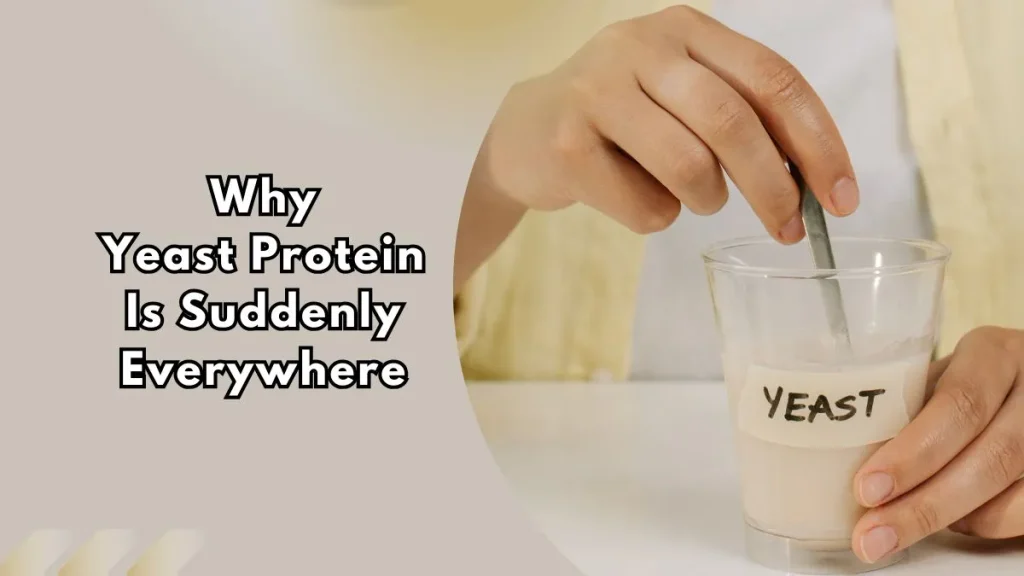
If you feel like yeast protein appeared out of nowhere this year, you are not imagining it. Bollywood actor Ranveer Singh’s brand SuperYou launched a bio-fermented yeast protein powder aiming to capture a real slice of India’s protein market. Starbucks India even ran a limited collaboration with SuperYou on a protein cold foam add-on for coffee. Marico, one of India’s largest consumer goods companies, acquired a 60% stake in fermented yeast protein brand Cosmix earlier this year.
That tells you serious money now sees this as more than a passing fad. Several other Indian brands, from Nutrabay’s own yeast protein powder to Mille, have launched their own versions in the same window. That adds to an already crowded supplement shelf.
None of this is happening in isolation. A Reuters investigation into India’s broader protein boom found that India’s high protein dairy market alone grew 9.4% to touch 1.5 billion dollars in 2024. Much of that growth traces back to the country having the world’s highest vegetarian population and genuinely low meat consumption compared to most of the world.
Yeast protein’s rise is really one branch of that much larger protein craze, not a standalone trend. Market researchers at DataM Intelligence project India’s fermented yeast protein segment specifically growing from around 36 million dollars in 2024 to over 100 million dollars by 2032. That is real, sustained growth rather than a one season spike.
Worth adding some honesty here that most brand pages will not give you: A LinkedIn analysis by a food industry professional described the current phase, 2025 to 2027, as one of hype and trial. Consumers are curious, and brands are still testing the waters. The same post flagged real, unresolved challenges, including taste and aftertaste issues, limited long term scientific validation, and regulatory clarity still evolving. That lines up closely with my own experience of the taste, and it is worth keeping in mind before you buy into any brand’s confident marketing copy.
You Might Also Like: Best Dietary Supplements For Men: A Detailed Guide
Advantages of Yeast Protein
Setting the hype aside, there are genuine, real advantages here. Yeast protein contains all 9 essential amino acids and can provide a complete amino acid profile on its own. It is also produced through fermentation rather than dairy farming or crop cultivation. Fermentation can potentially use less land and water than conventional animal protein production. The real environmental footprint, though, depends heavily on the energy source, feedstock, and manufacturing process behind each specific brand. Yeast protein itself contains no lactose or dairy protein, and pure yeast protein products can also be formulated without soy or gluten.
Even so, always check the finished product’s ingredients and allergen label. A flavoured or blended yeast protein powder can still contain milk, wheat, or other allergens depending on the formulation. It is also proving versatile beyond the classic shaker bottle. Indian brand Mille recently launched a savoury, fermented yeast protein blended into a traditional buttermilk or chaas format. The idea is to fit into existing Indian eating habits rather than asking people to adopt a Western style protein shake.
What About the Gut Friendly Claims
This is the part that got me curious in the first place, so it deserves real scrutiny rather than a quick yes. A 2026 study in Frontiers in Microbiology looked at how yeast protein affects gut microbiota activity. It is important to be precise about what this study actually did. Researchers collected fecal samples from 6 men aged 50 to 65, then grew those donors’ gut bacteria in lab bioreactors using a technology called SIFR. Yeast protein was applied to these lab cultured microbial communities, not consumed by any human being as part of the study.
The results showed the protein appeared to strengthen gut barrier integrity and reduce inflammation markers in this lab model. The authors themselves describe the findings as mechanistic insights that still need confirmation in real human trials. It is also worth noting that some study authors were employed by Angel Yeast, which supplied the tested protein, and by Cryptobiotix, which ran the lab model. That does not make the science wrong.
It is a real detail worth knowing before treating the result as independent confirmation. Early laboratory research suggests yeast protein may be well tolerated and may influence the gut microbiome in encouraging ways. Evidence from real world human trials is still limited.
Recommended For You: Is Protein Powder Good for Weight Loss? Truth, Benefits & DIY Recipe
Why Yeast Protein Is a Good Fit for Many Indians
There are practical, India specific reasons this category is landing well here, beyond just celebrity marketing. Lactose intolerance is relatively common in India, affecting an estimated 60% of the population. Being dairy free does not automatically mean a product is easier on digestion for everyone. For people who specifically react to lactose, though, yeast protein sidesteps that particular issue since it contains no dairy at all.
India also has one of the world’s largest vegetarian populations. Reuters reporting linked above on the country’s broader protein boom also cites an estimated 73% of the population as protein deficient. That combination makes any credible complete protein source genuinely useful here, not just trendy. There is also a cultural fit worth noting. Fermentation already sits at the centre of Indian food, in dahi, idli batter, dosa batter, and kanji, precisely because fermentation tends to improve digestibility.
Yeast protein is, in a sense, applying a principle Indian kitchens have used for generations to a modern supplement format. If you want the deeper science on how fermentation supports gut health more broadly, our piece on fermented foods and immunity goes further into that.
Yeast Protein vs Whey Protein: What the Numbers Actually Show
Yeast protein digests slightly less efficiently than whey, but far better than pea or soy protein. It is not identical to whey, but it is close, and it is a genuinely solid dairy-free alternative.
Also, this is where most brand pages get vague, and where the real answer matters most if you are deciding between the two. Your body cannot use 100% of the protein in any powder. Scientists score protein quality using a system called DIAAS. It measures how well the essential amino acids in a protein get digested and how closely they match what the human body actually needs. A higher score generally means better protein quality, though it does not directly measure muscle growth.
A 2025 study in Food Chemistry tested yeast protein against whey and common plant proteins side by side. It used growing rats and a lab digestion model called INFOGEST rather than a human muscle-building trial. The full study sits behind a paywall, so I cross checked the numbers below against multiple peer-reviewed papers that cite this study’s results. Here is what it found:
- Yeast protein DIAAS score: 0.82
- Whey protein DIAAS score: 1.14 to 1.27
- Pea and soy protein DIAAS score: 0.20 to 0.61
In plain terms, your body absorbs yeast protein a little less efficiently than whey, but noticeably better than the plant proteins tested in the same study. It is not quite equal to whey the way some marketing suggests, but it is not far behind either. It comfortably beats the usual plant based options.
One quick myth to clear up: Some brands only mention a different, older score called PDCAAS, where yeast protein hits a perfect 1.0, equal to whey. That older score is real too, it is just less precise than DIAAS. Quoting only the flattering older number without the newer one is a bit like only showing your best exam score and leaving out the rest.
And if you’re wondering, does a lower DIAAS mean less muscle growth? Then not necessarily. This score measures digestion, not muscle building directly. How much muscle you build depends on your total protein intake and your overall diet, not on this one number alone. If dairy does not suit you, yeast protein remains a genuinely solid substitute, not just a consolation prize.
Yeast Protein vs Whey Protein vs Plant Protein, Compared
The table below puts the yeast protein vs whey protein question next to plant protein, so you can see where each source actually stands.
| Factors | Yeast Protein | Whey Protein | Pea or Soy Protein |
| DIAAS in the 2025 Food Chemistry study | 0.82 | 1.14 to 1.27 | 0.20 to 0.61 |
| All nine essential amino acids | Yes | Yes | Yes, but amino acid balance varies |
| Lactose | None | Present in concentrate, minimal in isolate | None |
| Common issue reported | Foaming, taste and aftertaste | Bloating in the lactose sensitive | Grittiness, gas |
Note: These DIAAS scores come from the specific protein isolates tested in the 2025 Food Chemistry study and should not be treated as universal values for every commercial yeast, whey, soy, or pea protein product on the market. Formulation and processing can shift these numbers brand to brand.
Why It Foams and Tastes Different
Yeast derived ingredients can have functional properties that affect how well air gets incorporated and how stable that foam is. The exact amount of foam depends on the protein’s processing, formulation, and mixing method. In other words, the fizz is not necessarily a sign that something is wrong with the powder. My own shaker bottle experience turned out to have a reasonable explanation, not just bad luck. The foaming is not unusual.
Some yeast protein powders also foam noticeably when shaken, in my experience and by several accounts online. On taste, many yeast protein formulations still carry a distinct earthy or slightly bitter note from the yeast itself. Flavouring has improved over time, but it has not yet fully matched the neutral, milky taste whey drinkers are used to.
Who Should Be Cautious
People with a known yeast allergy should avoid yeast protein products unless their clinician advises otherwise. Confirmed yeast allergy is uncommon. But if you have a history of significant food or fungal allergies, check the product’s allergen information and talk to a healthcare professional if you are unsure. People with sensitive digestion more generally may want to start with a smaller serving. See how you tolerate the product before committing to a full daily dose.
TheFitInside’s Verdict!
Yeast protein’s sudden rise in India is real, backed by genuine market money and a broader national protein boom, not just clever marketing. The science behind it is genuinely promising, particularly on the gut friendly front, but it is still catching up to decades of whey research. The honest comparison shows a real, if modest, digestibility gap rather than a perfect match. If dairy does not agree with you, or you simply want to diversify beyond whey, it is a legitimately strong option worth trying. Foam, taste quirks and all.
Frequently Asked Questions
Yeast protein is a complete protein extracted from fermented Saccharomyces cerevisiae yeast, the same species used in bread and beer, through a controlled extraction and drying process.
Not quite equal on paper. Whey has a higher DIAAS score, meaning slightly better digestibility, but yeast protein is a strong, lactose-free choice if you want to avoid dairy entirely.
For most healthy adults, yes, when taken within the recommended serving size on the label. People with a known yeast allergy should avoid it unless a clinician advises otherwise.
Because yeast multiplies rapidly through fermentation in controlled tanks, requiring far less land, water, and time than raising dairy cattle for whey.
People with a known yeast allergy should check with a clinician first. Anyone with sensitive digestion may also want to start with a smaller serving to see how their body responds.
Many formulations carry a distinct earthy note from the yeast itself, and some yeast protein powders foam noticeably more than whey when shaken.
No. There is no credible connection between the food yeast strain used in these supplements and yeast infections. Infections are caused by an entirely different organism, Candida, not by Saccharomyces cerevisiae.
It suits people who are lactose intolerant or avoiding dairy, vegetarians looking for a complete protein source, and anyone wanting to diversify beyond whey. If pure digestibility per gram is your only priority, whey still has a slight edge on paper.
Sources and References
Reuters, In protein-deficient India, McDonald’s, Bollywood and cricket fuel wellness craze
