

Quick Note: This article on penguin walk in Indian moms is built on peer-reviewed research, clinical sources, and real expert commentary, not my own medical practice. Where I cite a number, it comes from an actual study or a named professional, not a secondhand summary. Treat this as information to help you ask the right questions, not a diagnosis.
I’ve heard people describe this side-to-side walk as a “penguin walk” for years, without realising there was a medical vocabulary for the pattern. It became more interesting once the phrase started trending online, because the appearance can actually point to several very different underlying problems.
A Mumbai-based physiotherapist, Akash Singh, founder of One Rehab, with a Bachelor of Physiotherapy degree and over five years of clinical experience, has been widely credited with explaining one possible reason so many Indian mothers develop this same walk after 60. He did so in a reel that’s since been shared across platforms. His explanation is a genuinely useful starting point. But it’s one piece of a bigger, more nuanced picture, which is what the rest of this article actually digs into.
Quick Answer
If you want the short version of why do older indian women waddle, before the full breakdown, here’s the summary of what’s actually going on:
- “Penguin walk” isn’t a formal medical diagnosis. It describes a visible pattern, and doctors may call it a waddling gait or a Trendelenburg-type gait depending on what’s actually causing it.
- Hip abductor weakness is one common contributor, but a side-to-side walk can also come from orthopaedic, neurological, or balance-related causes, so it genuinely needs proper assessment, not a guess.
- A real clinical test exists that a doctor or physiotherapist can use as part of a broader examination, though it isn’t a complete diagnosis by itself.
- Menopause, nutrition, and lifelong activity patterns are all plausible contributing factors in older Indian women specifically, though there isn’t strong comparative evidence proving this population is affected more than any other.
- A forward-leaning posture is a separate concern worth its own conversation with a doctor, since it has several possible causes, not one default explanation.
Now, let’s dig into the actual details.
One Term, Two Very Different Things
Penguin walk human cases fall into two genuinely different categories, and it’s worth clearing this up before going further. Search “penguin walk” online and you’ll also find an entirely unrelated trend, pregnant women describing their own waddling walk in the final weeks of pregnancy.
That version is temporary, caused by pregnancy hormones loosening ligaments, and it resolves after birth. It has nothing to do with what we’re covering here, and it isn’t why Indian moms walk like penguins after 60.
Penguin walk in Indian moms, the version discussed in the recent trend, is about older women, and it comes from a different set of possible mechanisms entirely.
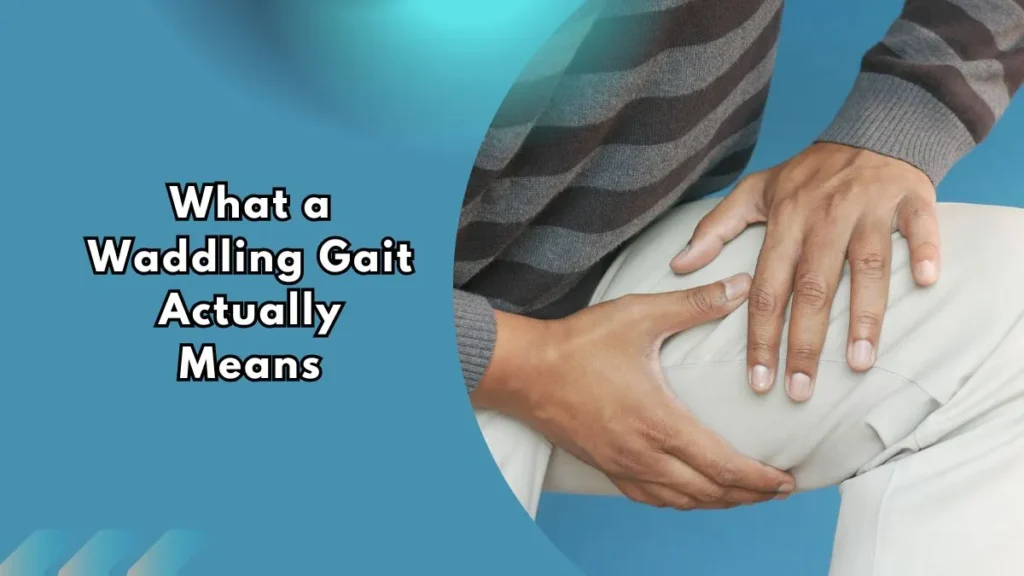
What a Waddling Gait Actually Means, Medically
“Penguin walk” isn’t a clinical term at all, it’s just a description people use for a visible side-to-side sway. What people call a penguin walk can actually describe several different gait patterns, and it’s worth being precise about that rather than jumping straight to one explanation.
In some older women, this kind of walk relates to weakness in the hip abductor muscles, a pattern doctors sometimes call Trendelenburg gait. But the broader term, waddling gait, isn’t automatically the same thing. Clinical sources are explicit that waddling gait is a descriptive pattern with multiple possible causes, orthopaedic, neurological, or muscular. It shouldn’t be treated as identical to Trendelenburg gait just because the two often get used loosely as synonyms.
If weak hip abductors are actually the cause, this is generally how it works: Every time you take a step, your full body weight briefly rests on one leg, that split second before your other foot lands. A healthy gluteus medius on that side normally keeps your pelvis level while the other leg swings forward. When that muscle is weak, the pelvis can drop on the unsupported side instead, and the body compensates by leaning toward the weight-bearing leg to keep balance. But this is one specific pathway among several possible ones, not the explanation for every case of this walk.
Dr. Gaurav Prakash Bhardwaj, Director and Senior Consultant for Sports Injury and Joint Replacement at PSRI Hospital, told Indian Express that a noticeable side-to-side walk shouldn’t be written off as normal ageing. He points to weakness in the hip and pelvic muscles as one likely cause, alongside a range of possibilities including hip arthritis, spinal issues, and nerve-related conditions, and recommends assessment if the pattern is new, worsening, painful, or paired with repeated falls.
How Doctors Actually Test for It
There’s a real, established clinical examination for hip abductor weakness specifically, called the Trendelenburg test, and it’s worth knowing this exists even though almost nobody explains it. A clinician or physiotherapist can perform it as part of a broader gait and hip examination. This typically involves watching whether the pelvis stays level while a person stands on one leg for about 30 seconds.
A positive result, where the pelvis on the unsupported side visibly drops, can suggest hip abductor dysfunction. But it isn’t enough on its own to identify the underlying cause. It’s genuinely something meant to be assessed by a trained professional as part of a fuller examination, not something to try diagnosing on your own at home. According to a clinical review of the Trendelenburg test, its sensitivity and specificity fall somewhere in the 55 to 77% range depending on the study. A positive result can also point to a few different hip issues, not only age-related muscle weakness.
Why This Walking Pattern Gets Noticed in Older Indian Women
Several factors could plausibly contribute to why older indian women waddle, especially since it is more common among Indian women. These include age-related muscle loss, lower physical activity, nutritional gaps, and underlying hip or neurological conditions. There isn’t strong comparative research establishing that these factors explain this walking pattern more strongly in Indian women than in other populations. What follows are real, individually documented factors worth understanding, not a proven, complete causal chain.
1. Menopause and Muscle Changes
Muscle mass and strength tend to decline with age, and this decline appears to accelerate around the menopausal transition for many women. Falling estrogen may contribute to that shift. A review published in the Journal of Exercise Rehabilitation puts general post-menopausal muscle loss at roughly 0.6% of mass per year. The precise relationship between menopause and this kind of muscle loss is still being actively studied. It isn’t the same as saying menopause alone causes a waddling gait.
2. Nutrition Gaps Worth Knowing About
Muscle needs adequate protein to repair and maintain itself, and there’s a real, documented gap worth being aware of. This isn’t a direct explanation for anyone’s specific gait, but a genuine nutritional concern in its own right. According to the National Institute of Nutrition’s own guidelines, the recommended dietary allowance is 0.83 grams of protein per kilogram of body weight per day for a healthy adult. This figure is a general population guideline, not necessarily the optimal intake for an older woman managing existing muscle loss or illness. That’s worth discussing with a doctor individually.
According to a 2017 survey covered by the Observer Research Foundation, 73% of the Indians surveyed fell short of their estimated protein needs. That figure comes from one survey’s sample and definition, though, not a nationally representative clinical diagnosis for every individual. If you’re weighing whether a supplement helps close a personal gap, I’ve written separately about whether protein powder is actually helpful for weight loss.
3. A Lifetime Without Structured Strength Training
Physical labour and structured strength training aren’t the same thing, even though they can look similar from the outside. Decades of cooking, cleaning, and household work builds a certain kind of physical endurance. But it doesn’t necessarily target hip stabiliser muscles the way a deliberate strengthening exercise would. Gym and fitness culture has also historically had far less reach among older Indian women than younger generations, which plausibly compounds the picture. Again, this is a contributing pattern worth naming honestly, not a proven singular cause.
4. A Note on Menopause Awareness
Menopause can genuinely affect muscle and bone health, but a change in gait shouldn’t automatically be attributed to menopause without a proper assessment. Broader awareness of menopause-related health effects and treatment options is limited in parts of India, which is worth knowing as context. Persistent or worsening gait changes still deserve their own evaluation to identify the actual cause, rather than being filed under a single explanation.
When a Forward Lean Is Also Present
A forward-leaning posture in an older adult deserves its own, separate assessment, since it can have several possible causes, not one default explanation. Osteoporotic vertebral compression fractures are one real possibility, particularly alongside new back pain, a noticeable loss of height, or an increasingly rounded upper back. A study of postmenopausal women in Punjab found osteoporosis in 30.5% of those tested, and osteopenia, a milder form of bone loss, in a further 44.2%. Just over a quarter had normal bone density. A larger national screening study, covering over 31,000 people, found a similar pattern across every region of India, with women consistently more affected than men.
Also, Globally, 1 in 3 women over 50 will experience an osteoporosis-related fracture, according to the International Osteoporosis Foundation, roughly double the rate in men of the same age.
That data establishes real osteoporosis prevalence in these populations, though it doesn’t, on its own, prove that any one individual’s forward lean is caused by it specifically. I’ve written more about bone health in women if this is something you want to look into further, since it’s worth its own conversation with a doctor either way.
Real Risks If a Gait Change Goes Unaddressed
A waddling gait left unaddressed can push other joints to compensate over time. The lower back may overwork to help with balance, sometimes contributing to chronic back pain. The knees can end up absorbing pressure at an angle they weren’t built for, which may accelerate knee discomfort.
And because balance can genuinely suffer, there’s a real, practical concern around a higher chance of falls. That matters far more in older adults than in someone younger. None of this means every case is serious, but it’s a real reason not to simply write the change off.
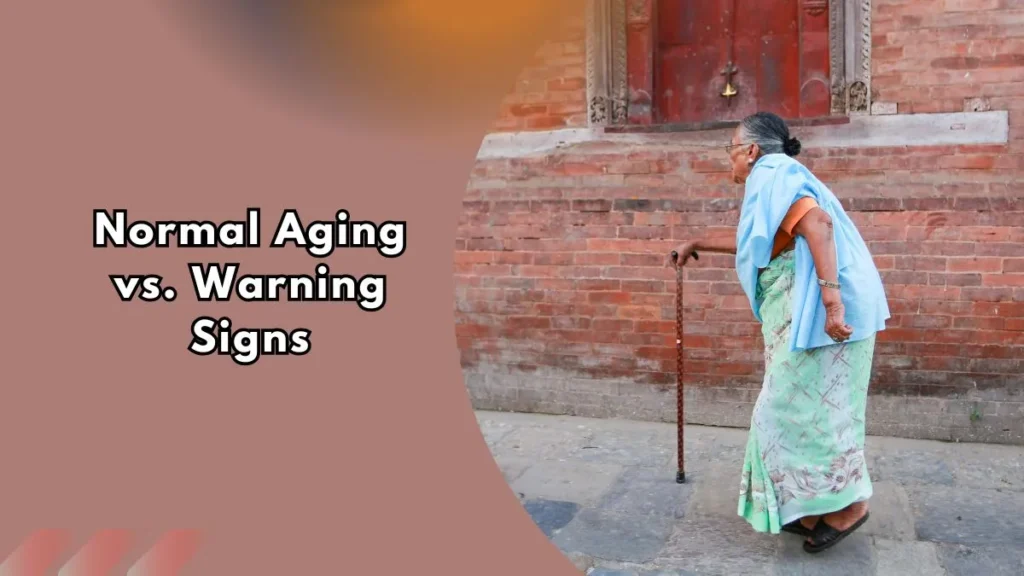
Penguin Walk in Indian Moms: Normal Aging vs. Warning Signs
Once you understand what are the causes of a penguin walk can genuinely include, it becomes easier to separate ordinary aging from a real warning sign. That’s worth checking with a professional either way.
| Changes That Can Occur With Normal Aging | Changes Worth Getting Assessed |
| Slightly slower walking pace | A visible side-to-side sway that’s new or worsening |
| Occasional stiffness after sitting | Persistent pain in the hip, back, or knee while walking |
| Minor balance adjustments on uneven ground | Frequent stumbling or a fall in the past year |
| Slight posture changes with age | A forward lean that’s progressively increasing |
| Preference for slower, careful movement | Sudden difficulty climbing stairs or standing from a chair |
When to Seek Urgent Care, Not Just a Check-Up
Everything discussed so far points toward a musculoskeletal cause, weak hip muscles, low bone density, general deconditioning. But a new or rapidly worsening gait change isn’t always that. It can also be a sign of something neurological and time-sensitive, and that possibility deserves its own, separate attention.
Seek urgent medical care, not a routine appointment, if a gait change appears alongside any of the following:
- A sudden onset, rather than a gradual change noticed over months
- Weakness that’s noticeably worse on one side of the body
- New numbness or tingling, especially on one side
- Difficulty speaking, slurred speech, or trouble finding words
- Sudden dizziness or a real loss of coordination
- An inability to bear weight on one leg at all
These can be signs of a stroke or another acute neurological event. That’s a genuinely different situation from the gradual, muscle-related changes this article otherwise focuses on. When in doubt, especially with sudden onset, treat it as an emergency and seek immediate medical attention rather than waiting to see if it improves.
The ‘It’s Just Old Age’ Myth
This might be the most important thing to put simply. There’s a specific reason this gets waved off so often. Indian families tend to reframe a mother quietly putting her own health last for decades as love, sacrifice, or selflessness, rather than recognising it as a real pattern worth addressing.
Dr. Manan Vora, a double board-certified orthopaedic surgeon and sports medicine specialist based in Mumbai, points to the same underlying causes, weak hip muscles, knee joint problems, or in some cases neurological conditions. In the same reel, he pushes back directly on the instinct to call this a mother’s sacrifice rather than something worth getting checked.
A lot of Indian households treat a changed walk in an older woman as simply what happens with age. That instinct is understandable and comes from a good place, but it isn’t the full picture. A persistent gait change can have identifiable and potentially treatable causes, a real clinical examination process, and genuine treatment options once a cause is actually established. Writing it off as inevitable is often exactly why it goes unaddressed for years.
Prevention Starts Earlier Than You Think
Most advice on this topic only speaks to someone already noticing it in their mother. But if you’re a woman in your 30s or 40s reading this, the real opportunity is now, before menopause-related changes potentially accelerate, rather than after. Building general hip and lower-body strength, and closing any real protein gap, are sound preventive habits either way.
These help regardless of whether they turn out to be relevant to any specific future gait change. If you’re vegetarian and building a strength routine, it’s also worth reading about why your creatine baseline is already lower, since that’s a related, often-overlooked piece of the same muscle picture.
How a Waddling Gait Is Actually Evaluated and Treated
If you’re looking into how to fix a penguin walk, the honest answer is that treatment genuinely depends on what’s actually causing it. That’s exactly why proper assessment matters more than guessing.
- Get it properly assessed first: A doctor or physiotherapist can perform the Trendelenburg test and a broader gait examination, rather than trying to self-diagnose the cause from home.
- If hip abductor weakness is identified: A physiotherapist may prescribe targeted exercises, things like side-lying hip abduction, resisted side-stepping, or balance work, tailored to what’s actually found.
- Make sure your overall diet provides adequate protein: Paneer, curd, lentils, eggs, and sprouts are practical, accessible sources for most people. If you’re unsure whether you’re getting enough or not, a dietitian or doctor can help assess your intake, particularly if you have kidney disease or another condition that affects protein needs. Our Indian diet calorie calculator and meal planner may also be useful if you’d like to explore a realistic daily target.
- Treat a forward lean as its own, separate concern: If that’s also present, it deserves its own bone-health conversation, ideally including a bone density scan.
- Take a fall seriously, even a single one: Standard fall-prevention guidance for older adults treats any fall as worth mentioning to a doctor, not just ones that are recurrent or injurious. It’s a real, practical way to catch an underlying balance or strength issue early.
This is not meant to cause alarm. It’s about recognising that a change in walking that may look like normal ageing is worth checking properly. The real shift worth making isn’t telling your mother to rest more, it’s building strength alongside her.
Frequently Asked Questions
“Penguin walk” isn’t a single diagnosis. In older women, it can relate to hip abductor weakness, and several plausible contributing factors exist in Indian women specifically. These include menopause-related muscle changes, nutritional gaps, and lower lifelong activity levels, though strong comparative evidence for this exact population isn’t established.
It isn’t a formal medical diagnosis. Doctors may describe the observed pattern as a waddling gait or a Trendelenburg-type gait. Which term applies depends on what they actually see and what turns out to be causing it.
Treatment depends entirely on the underlying cause, which is why a proper assessment matters more than assuming. Where hip abductor weakness is confirmed, targeted exercises like side-lying hip abduction are a common approach, alongside closing any real nutritional gaps.
The underlying mechanisms, including hip abductor weakness, can affect anyone, so penguin walk human cases aren’t exclusive to one gender. It may show up more visibly in older women partly due to menopause-related muscle changes, though this isn’t a fully settled comparison.
Not always, but it’s always worth a proper check rather than an assumption either way. A doctor or physiotherapist can assess the actual cause, which is more useful than guessing from the outside.
Sources
- Akash Singh, Instagram Reel
- Trendelenburg Sign
- The reason some women start walking ‘like penguins’ after 60: ‘And it doesn’t stop…’
- Trendelenburg Test: Orthopedic Examination of the Hip
- Role of Exercise in Estrogen Deficiency-Induced Sarcopenia
- A Brief Note on Nutrient Requirements for Indians
- India’s Protein Deficiency and the Need to Address the Problem
- Prevalence and Predictors of Osteoporosis and Osteopenia in Postmenopausal Women of Punjab, India
- Prevalence of Osteoporosis in India: An Observational Study
- Dr. Manan Vora, Instagram Reel
- Epidemiology of Osteoporosis and Fragility Fractures. International Osteoporosis Foundation.
